A stroke changes how the brain communicates with the body — affecting mobility, balance, coordination, and independence. Recovery isn’t about “learning to move again.” It’s about teaching the brain and body to reconnect through intentional, targeted movement.
At Revolve Physical Therapy, stroke rehabilitation is built around neuroplasticity — the brain’s ability to rewire and form new pathways. Every exercise, every cue, and every repetition is designed to restore function, confidence, and control so patients can return to meaningful daily activities.
Why Physical Therapy Matters After a Stroke
After a stroke, muscles aren’t weak because they’re deconditioned — they’re weak because the brain isn’t sending signals effectively.
PT focuses on:
- Rebuilding motor control
- Improving gait and balance
- Restoring coordination and reaction time
- Reducing muscle stiffness and spasticity
- Re-learning activities of daily living
- Improving safety during walking and transfers
Progress happens when exercises are specific, purposeful, and consistent.
Effective Stroke Rehabilitation Physical Therapy Exercises
Every stroke patient has unique needs depending on what part of the brain was affected. The exercises below represent common elements of a PT program, but each plan is customized based on strength, mobility, tone, gait pattern, and functional goals.
1. Early Movement + Neuromuscular Re-Education
These exercises focus on reconnecting the brain to the affected limbs.
Passive & Active-Assisted Range of Motion
Helps reduce stiffness and maintain joint mobility.
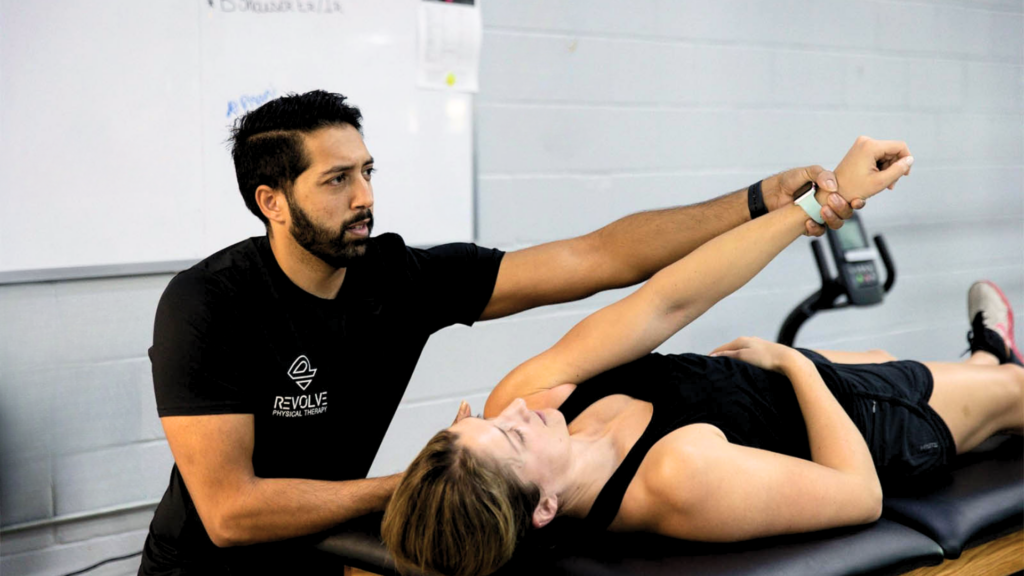
Therapist-guided movements encourage early activation.
Bridging
Improves hip strength and stability for sitting, standing, and transferring.
Seated Weight Shifts
Retrains balance and postural control by teaching the body how to stabilize again.
Hand and Finger Activation
Gripping, releasing, tapping, and wrist extension drills help improve fine motor control.
2. Strengthening for Functional Control
Once the patient regains some movement, we rebuild strength strategically.
Sit-to-Stand Training
Develops leg strength, balance, and confidence during transitions.
Marching in Place
Improves hip flexion strength and prepares for walking.
Supported Mini Squats
Helps restore lower-body strength while maintaining alignment and safety.
Resistance Band Arm Exercises
Improves shoulder stability and upper-extremity function.
3. Gait Training & Balance Retraining
Walking after a stroke requires retraining pattern, rhythm, and weight distribution.
Gait Pattern Correction
The therapist analyzes step length, foot clearance, and pelvic movement to correct compensations.
Tandem Balance Work
Improves control of the trunk and legs to reduce fall risk.
Step Training
Includes step-ups, step-taps, and lateral stepping to improve coordination and spatial awareness.
Heel-to-Toe Walking
Refines gait mechanics and improves ankle mobility for safer walking.
4. Functional Task Training
Stroke rehab must translate into real-life ability, not just isolated exercises.
Reaching Tasks
Improves shoulder stability and coordination for daily tasks.
Grasp-and-Place Activities
Restores hand function for eating, dressing, and household tasks.
Bed Mobility Drills
Helps patients roll, reposition, and sit up with more independence.
Transfer Training
Practice moving safely from bed → chair → standing → walking.
5. Cognitive-Movement Integration
For many patients, motor and cognitive functions need to be retrained together.
Dual-Task Drills
Walking while naming objects, stepping while following visual cues — enhances reaction time and brain-body communication.
Rhythmic Movement Training
Using rhythm or metronome cues helps improve step timing and movement sequencing.
Hands-On Techniques That Support Stroke Exercise Therapy
In addition to exercises, we use hands-on treatments to improve movement and reduce compensation:
- Soft tissue release
- Joint mobilization
- Neuromuscular facilitation techniques
- Guided movement corrections
- Spasticity management strategies
- Sensory retraining
These help the body move more efficiently and comfortably during rehabilitation.
How Long Does Stroke Rehabilitation Take?
Stroke recovery varies widely.
General expectations:
- Early recovery (first 1–3 months): Fastest gains
- Ongoing improvement (3–6 months): Steady progress
- Long-term neuroplasticity: Months to years with consistent therapy
Consistency and correct movement matter more than speed.
Frequently Asked Questions
Can someone improve even years after a stroke?
Yes. Neuroplasticity continues long-term with the right exercises and repetition.
How often should stroke patients do physical therapy?
Most benefit from PT 2–3 times per week, plus guided home exercises.
Is it normal for one side to feel stiff or weak?
Yes — this is common after a stroke. Therapy helps retrain symmetry and control.
Do stroke patients fully recover?
Many regain significant function. Outcomes depend on the stroke severity, consistency of therapy, and lifestyle factors.
Final Words
Stroke rehabilitation is not just about exercises — it’s about rebuilding communication between the brain and body. With a targeted, hands-on, and movement-focused approach, patients can regain strength, stability, and confidence in their daily lives.
Revolve treats clients post stroke but on a case by case basis. Ex: if they need constant support/assistance, 1 on 1 sessions will be required due to limitations with medical insurance. Our team can assist in helping you make the best decisions for your rehab care.
Revolve Physical Therapy offers specialized sports injury at our River Oaks, Memorial, and Sugar Land clinics