
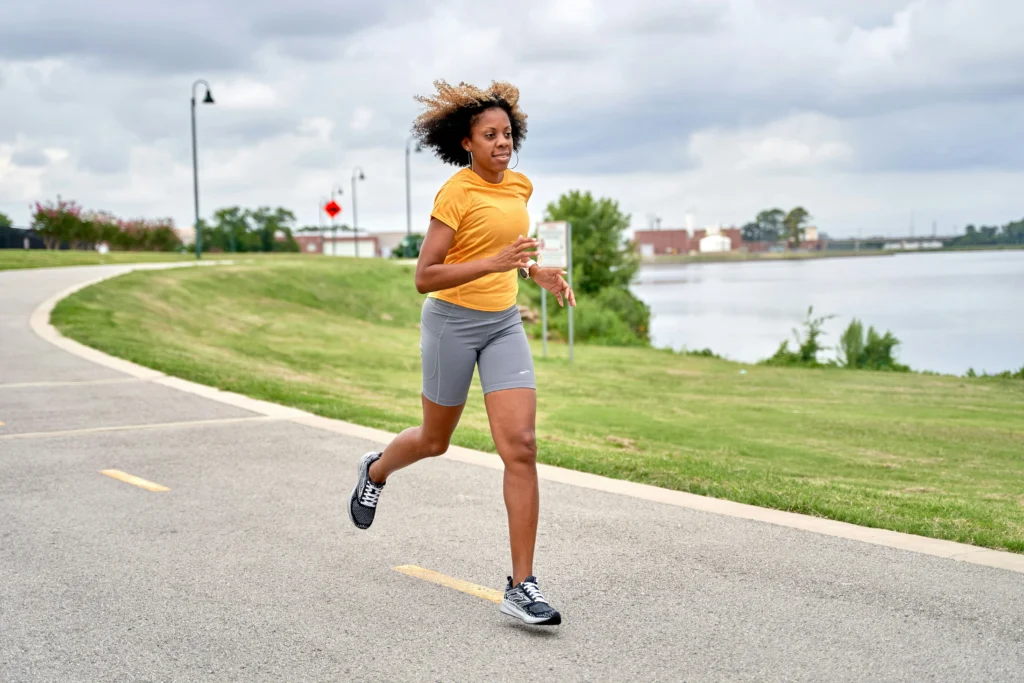
Knee pain isn’t a normal part of running, even though many runners experience it. Most knee injuries don’t happen because of “weak knees” — they happen because of poor load management, inefficient movement patterns, and imbalances throughout the kinetic chain. The good news: with the right strategy, most knee issues are completely preventable.
At Revolve Physical Therapy, we focus on optimizing how your body absorbs force, transfers load, and maintains alignment — because healthy knees start long before your foot hits the ground.
Why Knee Injuries Happen
Running itself isn’t the problem. The issue is how your body moves while running.
Common contributors include:
- Limited hip mobility
- Weak gluteal and deep core muscles
- Overstriding or poor running mechanics
- Decreased ankle dorsiflexion
- Sudden increases in training volume
- Tight quads, IT band, or hip flexors
- Lack of strength and stability in the kinetic chain
When these factors combine, your knees take forces they weren’t designed to handle.
How to Prevent Knee Injuries When Running
1. Reset Your Movement Patterns
Before thinking about mileage, your body’s movement efficiency matters most. Faulty patterns like inward knee collapse, overstriding, or hip drop place unnecessary stress on your joints.
What we do at Revolve:
- Gait analysis to identify asymmetries
- Kinetic chain assessment to see how hips, knees, and ankles interact
- Manual cueing and drills to retrain proper mechanics
Tip: Focus on landing softly, keeping knees aligned with hips and feet, and engaging your core with every step.
2. Restore Hip and Core Stability
Your knees rely on the hips and core for support. Weak glutes or deep core muscles let your knees wobble under impact.
Key exercises for runners:
- Glute bridges and single-leg bridges
- Side-lying hip abductions (clamshells)
- Planks and side planks
- Step-downs and lunges
Strong hips and a stable core keep the knees tracking safely during every stride.
3. Rebuild Strength Around the Knee
Even if your hips and core are strong, underdeveloped quadriceps, hamstrings, or calves increase knee stress.
Revolve approach:
- Controlled squats and lunges with proper form
- Nordic hamstring curls or Romanian deadlifts
- Calf raises for shock absorption
- Step-ups to integrate strength with functional movement
Focus on controlled, quality movements rather than high volume.
4. Regain Functional Mobility
Tight muscles force compensation, which overloads your knees. Instead of generic stretching, we focus on functional mobility:
- Hip flexor and hamstring dynamic mobility
- Ankle dorsiflexion drills
- Myofascial release for quads, IT band, and calves
- Thoracic rotation drills to improve trunk rotation
The goal: move efficiently through your full natural range while running.
5. Progressive Load Management
Knee injuries often occur when the body is suddenly overloaded. Gradual, intentional progression is key:
- Increase mileage or intensity by no more than 10% per week
- Include alternating hard and easy days
- Track weekly volume and listen to your body
At Revolve, we design periodized running plans to reduce cumulative stress on the knees.
6. Integrate Sport-Specific Drills
Strength and mobility are only part of the equation — you need movement-specific conditioning for running:
- Single-leg hops and bounding for stability
- Agility ladder or cone drills to train knee alignment dynamically
- Plyometrics with proper landing mechanics
- Resistance band work for hip-knee control
These drills train your knees to absorb impact safely under real running conditions.
7. Hands-On Maintenance
Even for prevention, manual therapy keeps tissues healthy and aligned:
- Soft-tissue release for tight muscles
- Joint mobilization to restore knee tracking
- Myofascial release to reduce friction along IT band and quads
Regular hands-on care prevents compensations from creeping in and reduces injury risk.
8. Recovery and Body Awareness
Your knees need recovery to adapt to training stress:
- Adequate sleep and nutrition
- Active recovery (cycling, swimming, walking)
- Foam rolling or targeted soft-tissue work
- Listening to pain signals — early intervention prevents long-term injury
Tip: Pain is a warning. Don’t push through discomfort; address it immediately.
The Revolve Prevention Framework
Even for prevention, our process stays consistent:
Reset:
Address joint stiffness, soft-tissue restrictions, and faulty movement patterns.
Restore:
Build dynamic hip, core, and knee stability through targeted strengthening.
Revive:
Integrate running-specific mechanics, drills, and load progressions.
This approach keeps runners moving well — and running without pain.
When to See a Physical Therapist
If you notice any of the following, early intervention prevents long-term issues:
- Pain that worsens during or after running
- Knee swelling
- Sharp pain with stairs or squatting
- Repeated “flare-ups” despite rest
- Compensation patterns (limping, hip drop, knee collapse)
Small problems turn into major injuries when ignored. Early assessment keeps you on track.
Final Word
Preventing knee injuries isn’t about running less — it’s about running better.
By improving mechanics, strengthening the right muscles, and managing load intelligently, you protect your knees and elevate your performance.
At Revolve Physical Therapy, we don’t just treat pain — we rebuild movement so you can keep running, stronger and more resilient than before.
Revolve Physical Therapy offers specialized sports injury at our River Oaks, Memorial, and Sugar Land clinics